 EN
EN
 AR
AR
 BG
BG
 HR
HR
 CS
CS
 NL
NL
 FI
FI
 FR
FR
 DE
DE
 EL
EL
 IT
IT
 KO
KO
 NO
NO
 PL
PL
 PT
PT
 RO
RO
 RU
RU
 ES
ES
 SV
SV
 ID
ID
 LT
LT
 SR
SR
 UK
UK
 VI
VI
 HU
HU
 TH
TH
 TR
TR
 FA
FA
 MS
MS
 HY
HY
 AZ
AZ
 KA
KA
 BN
BN
 LO
LO
 LA
LA
 NE
NE
 MY
MY
 KK
KK
 KY
KY

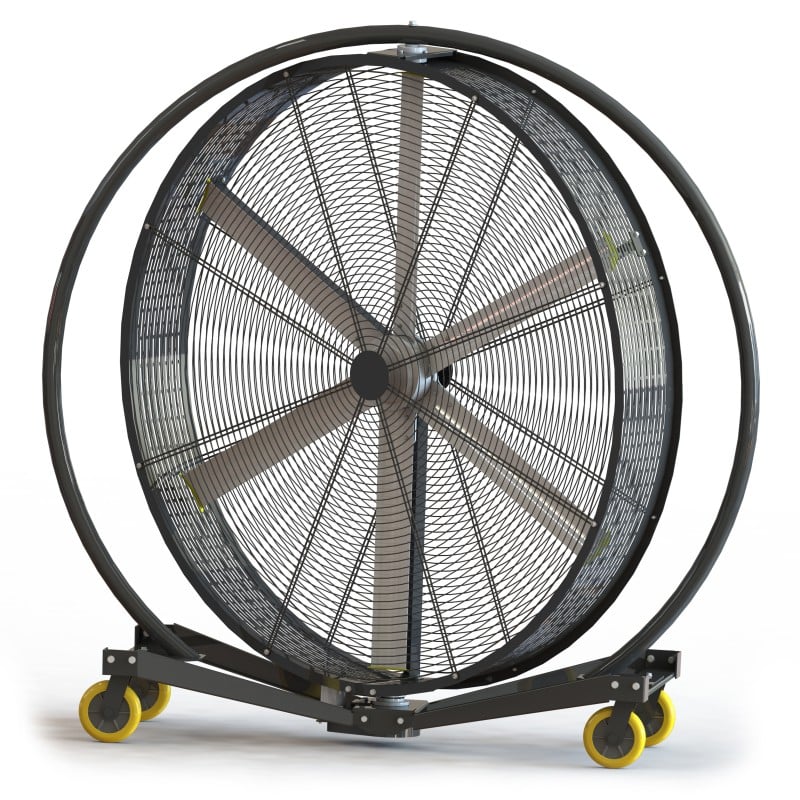
Why Industrial HVLS Fans Outperform Traditional Ventilation Systems
Traditional ventilation in large facilities often relies on high-speed fans or portable AC units—systems ill-suited for high-ceiling spaces. High-speed fans generate localized turbulence and drafts, while air conditioners consume excessive energy and demand frequent maintenance, all without resolving temperature stratification.
Industrial HVLS (High-Volume, Low-Speed) fans solve these core inefficiencies by moving vast columns of air slowly downward and outward from a single mounting point. With blade diameters commonly exceeding 8 feet—and up to 24 feet in heavy-duty applications—they can effectively condition up to 22,000 square feet. This gentle, non-disruptive airflow breaks up stratified heat layers, equalizing temperatures from floor to ceiling. Achieving comparable coverage with high-speed fans would require dozens of units—driving up capital investment, noise levels, maintenance complexity, and energy use.
Energy efficiency is among the most compelling advantages: while a typical HVAC system consumes ~70 kWh per day, a single HVLS fan uses just 2–3 kWh—a 95% reduction in direct cooling energy (U.S. DOE, 2021). In cooler months, the same fan destratifies heat by gently pushing warm air down from the ceiling, reducing heating costs by up to 30%. Employees benefit from improved thermal comfort, lower heat stress, and higher sustained productivity—making HVLS fans a year-round, low-operating-cost solution that outperforms traditional ventilation across performance, economics, and occupant well-being.
Key Engineering Features of Industrial HVLS Fans for Maximum Air Movement
Blade Design, Motor Efficiency, and Structural Durability
Performance begins at the blade: large-diameter aluminum or composite blades—engineered with aerodynamic, curved profiles—move massive air volumes at low RPMs. This design enables effective destratification while maintaining near-silent, vibration-free operation. At the core, direct-drive motors eliminate gearboxes entirely, boosting energy efficiency and eliminating a major source of mechanical wear, noise, and maintenance downtime. Structural integrity is reinforced by precision-machined hub assemblies and rigid mounting systems engineered to withstand constant torque without loosening—ensuring decades of reliable service even in demanding industrial environments. Collectively, these features reduce energy consumption per cubic foot of air moved by 30–50% compared to conventional high-speed fans, delivering both operational resilience and lower total lifecycle costs.
Variable-Speed Control and Integration with Building Management Systems
Modern industrial HVLS fans feature variable-speed controls that enable precise airflow modulation in response to real-time thermal loads—avoiding wasteful constant-speed operation. When integrated with a Building Management System (BMS), fans become intelligent climate partners: they respond dynamically to inputs from temperature, humidity, and occupancy sensors, and coordinate seamlessly with HVAC equipment. For example, during cooling peaks, the BMS can increase fan speed to distribute conditioned air more evenly—reducing compressor runtime and lowering annual energy bills by an estimated 15–25%. This integration transforms HVLS fans from standalone devices into adaptive, data-driven components of a holistic, sustainable thermal strategy.
Proven Applications Across Warehouses, Manufacturing Plants, and Distribution Centers
Industrial HVLS fans deliver measurable benefits in large, open spaces by improving air circulation, reducing energy demand, and enhancing occupant comfort.
Energy Savings and Thermal Comfort in High-Ceiling Environments
In facilities with 40-foot ceilings—common in warehouses and distribution centers—HVLS fans eliminate thermal stratification by continuously mixing air layers. This reduces cooling energy consumption by up to 30% (U.S. Department of Energy, 2022). The consistent, draft-free airflow also lowers perceived temperature by 5–8°F, decreasing heat-stress incidents and supporting higher workforce focus and output—without adding cooling capacity.
Complementary Role with HVAC Systems in Year-Round Climate Strategy
HVLS fans do not replace HVAC systems—they optimize them. During summer, they allow facility managers to raise thermostat setpoints by 4–5°F while preserving comfort; in winter, they recirculate trapped warm air from the ceiling zone, cutting heating costs by 20–30% (ENERGY STAR, 2024).
| Season | HVAC Challenge | HVLS Fan Role | Verified Energy Impact |
|---|---|---|---|
| Summer | Over-cooling to offset thermal stratification | Destratifies and provides occupant-level cooling | Up to 30% cooling energy reduction |
| Winter | Warm air pooling at ceiling, cold floors | Low-speed upward mode pulls heat back to the floor | 20–30% heating savings |
This synergy extends HVAC equipment life, reduces peak demand charges, and enables passive, whole-facility temperature balancing—turning climate control into a responsive, cost-efficient system.
Selecting the Right Industrial HVLS Fan: Sizing, Mounting, and ROI Considerations
Selecting the optimal HVLS fan requires a deliberate facility assessment—not just square footage, but ceiling height, structural capacity, existing airflow patterns, and seasonal usage. Match fan diameter to coverage area: a 10-foot fan typically serves ~10,000 sq ft at 20–30 ft ceilings, while larger 16–24 ft models suit facilities over 30 ft tall. Ensure minimum 7 feet of blade clearance from obstructions and confirm mounting points are rated for dynamic load—ideally anchored to reinforced structural beams or engineered support systems.
Though initial investment may exceed that of conventional fans, the total cost of ownership tells a different story. A highly efficient 1.5 kW HVLS motor moves air volumes that would otherwise require multiple high-speed units or oversized HVAC runtime—often enabling a 30% reduction in cooling-related energy spend. When combined with documented gains in employee productivity and reduced HVAC maintenance, payback periods frequently fall within 12–24 months. Proper sizing, professional installation, and integration planning aren’t just technical details—they’re strategic levers for long-term operational efficiency and facility resilience.
Frequently Asked Questions
What does HVLS stand for?
HVLS stands for High-Volume, Low-Speed, highlighting its capability to move large air volumes slowly.
How does an HVLS fan reduce energy consumption?
HVLS fans require less energy compared to traditional high-speed fans or HVAC systems by delivering efficient airflow and temperature balancing.
Are HVLS fans suitable for all types of facilities?
While HVLS fans are ideal for large spaces like warehouses and factories, their suitability must be determined by ceiling height, square footage, and structural assessments.
Do HVLS fans replace HVAC systems?
HVLS fans complement HVAC systems, optimizing their performance for lower energy costs year-round.
Table of Contents
- Why Industrial HVLS Fans Outperform Traditional Ventilation Systems
- Key Engineering Features of Industrial HVLS Fans for Maximum Air Movement
- Proven Applications Across Warehouses, Manufacturing Plants, and Distribution Centers
- Selecting the Right Industrial HVLS Fan: Sizing, Mounting, and ROI Considerations
 ONLINE