 EN
EN
 AR
AR
 BG
BG
 HR
HR
 CS
CS
 NL
NL
 FI
FI
 FR
FR
 DE
DE
 EL
EL
 IT
IT
 KO
KO
 NO
NO
 PL
PL
 PT
PT
 RO
RO
 RU
RU
 ES
ES
 SV
SV
 ID
ID
 LT
LT
 SR
SR
 UK
UK
 VI
VI
 HU
HU
 TH
TH
 TR
TR
 FA
FA
 MS
MS
 HY
HY
 AZ
AZ
 KA
KA
 BN
BN
 LO
LO
 LA
LA
 NE
NE
 MY
MY
 KK
KK
 KY
KY

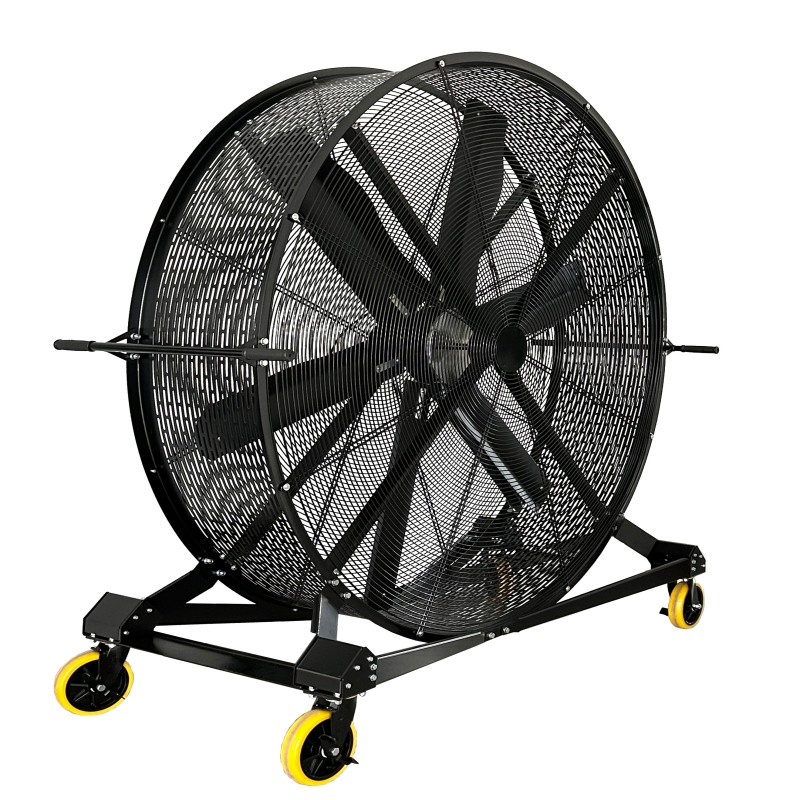
The Physics of Thermal Destratification: How Energy-Efficient HVLS Fans Cut HVAC Load
Why large industrial spaces suffer from extreme vertical temperature gradients (10–25°F)
Heat naturally rises, and in high-bay industrial spaces—factories, warehouses, hangars—warm air quickly stratifies. Hot air generated by machinery, lighting, and heating systems pools at the ceiling while cooler air settles near the floor, where people work. This vertical temperature differential often spans 10°F to 25°F, forcing floor-level thermostats to call for more heating—even as the ceiling remains unnecessarily hot. The HVAC system must overwork to maintain comfort, wasting energy and inflating operational costs. Without active air mixing, this thermal layering persists, creating discomfort on the ground and reducing the effectiveness of heating and cooling equipment across the entire facility.
Low-speed, high-volume airflow mechanics: Achieving uniform air distribution with <1% the energy of forced-air systems
An energy-efficient HVLS (High Volume, Low Speed) fan resolves stratification through gentle, large-scale circulation. Its massive airfoil blades move a wide column of air from floor to ceiling, gently pushing warm air down the perimeter and drawing cooler air up through the center to blend the layers. Unlike dozens of high-velocity forced-air fans that blast narrow, turbulent streams—each consuming 0.5–1 hp—a single HVLS fan typically runs on a 1–2 hp motor yet circulates over 300,000 cubic feet per minute. This means it achieves uniform temperature distribution using less than 1% of the energy required by fans of comparable coverage. The result is a near-uniform vertical temperature profile (±2°F) with no perceptible draft, enabling HVAC thermostats to operate on real floor conditions—not a misleading cold zone. Heating and cooling cycles shorten dramatically, and the building’s overall energy intensity drops without sacrificing worker comfort.
Proven Energy and Cost Savings from Energy-Efficient HVLS Fan Deployment
Quantifying the return on investment for an energy-efficient HVLS fan requires examining the precise mechanisms that translate air movement into reduced energy consumption. The savings are not theoretical; they are documented in facility audits and academic research, frequently shifting these large-diameter, low-speed fans from a simple comfort upgrade to a critical component of a lean energy management strategy.
42% HVAC runtime reduction in a 250,000-sq-ft automotive assembly plant
In high-bay manufacturing environments, the urge to over-condition air to compensate for intense thermal stratification is a primary driver of energy waste. A case study focusing on a 250,000-square-foot automotive assembly plant quantified the direct impact of strategically placing six 24-foot energy-efficient HVLS fans. Prior to installation, roof temperatures exceeded the occupied zone by nearly 18°F, forcing the packaged rooftop HVAC units into continuous operation to maintain a setpoint at the floor. The fans’ low-speed, high-volume airflow effectively equalized the temperature to within 3°F from floor to ceiling. This destratification allowed facility managers to implement a dynamic thermostat setback strategy, as documented by a third-party measurement and verification protocol. The result was a documented 42% reduction in compressor runtime across the 40-unit HVAC system during the cooling season. By eliminating the false load created by the hot ceiling mass, the plant avoided the need for a costly chiller capacity expansion, deferring over $740 k in capital expenditure and directly reducing annual electrical consumption by over 1.2 million kWh.
30% winter heating load reduction validated by ASHRAE RP-1692 research
While cooling-season savings are often the initial draw, the most substantial operational expense reduction from an energy-efficient HVLS fan frequently occurs during the heating months—a finding rigorously validated by ASHRAE Research Project 1692. The study’s small-chamber modeling demonstrated that without air circulation, the temperature gradient between the thermostat at 6 feet and a 30-foot ceiling can reach 15°F to 25°F, causing warm air from gas-fired unit heaters to be trapped uselessly at the roof. By introducing a minimal airspeed of 0.2 to 0.5 m/s, fans reclaim this buoyant heat. The ASHRAE RP-1692 research confirmed an average 30% reduction in natural gas consumption for heating when these fans operated on a reverse-mode schedule. This translates to a direct avoidance of Scope 1 emissions for facility operators. The science is rooted in the ideal gas law: the recovered heat already purchased is delivered back to the occupant level, reducing the temperature differential across the building envelope and correspondingly lowering conductive heat loss through the roof—the single largest source of energy bleed in unstratified industrial buildings.
Smart Integration: Connecting Energy-Efficient HVLS Fans with HVAC and Building Automation
From siloed operation to coordinated control: Enabling dynamic thermostat setbacks and occupancy-responsive staging
For decades, large industrial fans and HVAC systems operated in silos, each unaware of the other’s activity. Modern energy-efficient HVLS fans break this pattern through direct integration with building automation systems (BAS). An interoperable framework allows facility managers to implement dynamic thermostat setbacks—automatically raising cooling setpoints by 3–5 °F when fans create air movement, maintaining equivalent comfort while slashing compressor energy use. Occupancy-responsive staging takes efficiency further: sensors detect real-time zone population, then signal the BAS to scale fan speed and HVAC output proportionally. When a production bay empties, airflow reduces and dampers modulate, avoiding unnecessary conditioning of empty space. This coordinated control leverages low-speed, high-volume airflow to equalize ceiling-to-floor temperatures, effectively recycling trapped heat in winter and enabling free cooling in shoulder seasons. The result is a unified climate strategy that trims peak demand, extends equipment life, and turns ventilation into an active demand-side management tool.
Holistic Sustainability Impact: EUI Reduction, Carbon Avoidance, and Operational Resilience
Energy-efficient HVLS fans deliver a measurable reduction in energy use intensity (EUI) by sharply lowering HVAC runtime and space heating demand. Facilities that deploy these fans often report up to a 42% reduction in HVAC runtime and a 30% drop in winter heating load—directly translating into double-digit percentage point EUI improvements. These energy savings avoid Scope 2 carbon emissions, and the benefit grows as electricity grids incorporate more renewable sources. Beyond kilowatt-hours, the fans strengthen operational resilience: uniform airflow eliminates extreme temperature stratification, preventing thermal cycling stress on building materials and sensitive equipment. The gentle, high-volume circulation also reduces dependency on complex forced-air systems, lowering the risk of costly breakdowns. When integrated with building automation, the fans unlock dynamic thermostat setbacks and demand-responsive staging, compressing energy waste while maintaining steady comfort levels. Their low-speed, long-life design demands minimal maintenance and can outlast typical mechanical ventilation components, cutting whole-life embodied carbon and supporting circular economy goals. Together, these compounding effects position energy-efficient HVLS fans as a high-return, scalable measure for industrial sites pursuing net-zero pathways, climate risk mitigation, and dependable long-term operations.
Frequently Asked Questions (FAQ)
What is thermal destratification?
Thermal destratification refers to the process of equalizing temperature across vertical spaces in a building, preventing warmer air from pooling at the ceiling while cooler air stays near the floor.
How does an HVLS fan reduce energy consumption in industrial facilities?
An HVLS fan efficiently circulates air, blending hot and cold layers to reduce the need for excessive HVAC operations. It maintains a uniform temperature, allowing thermostats to operate accurately and reducing heating and cooling cycles.
What are the documented energy savings of HVLS fans?
Energy-efficient HVLS fans have demonstrated up to 42% reductions in HVAC runtime and 30% decreases in winter heating load, reducing overall energy intensity and operational costs.
Are HVLS fans effective during both heating and cooling seasons?
Yes, HVLS fans are highly effective during both seasons. They reclaim trapped heat in the winter and help manage cooling loads during warmer months by equalizing interior temperatures.
Can HVLS fans integrate with building automation systems?
Modern HVLS fans can connect with building automation systems, allowing dynamic thermostat setbacks and occupancy-responsive staging to optimize comfort and energy savings.
Table of Contents
- The Physics of Thermal Destratification: How Energy-Efficient HVLS Fans Cut HVAC Load
- Proven Energy and Cost Savings from Energy-Efficient HVLS Fan Deployment
- Smart Integration: Connecting Energy-Efficient HVLS Fans with HVAC and Building Automation
- Holistic Sustainability Impact: EUI Reduction, Carbon Avoidance, and Operational Resilience
- Frequently Asked Questions (FAQ)
 ONLINE