 EN
EN
 AR
AR
 BG
BG
 HR
HR
 CS
CS
 NL
NL
 FI
FI
 FR
FR
 DE
DE
 EL
EL
 IT
IT
 KO
KO
 NO
NO
 PL
PL
 PT
PT
 RO
RO
 RU
RU
 ES
ES
 SV
SV
 ID
ID
 LT
LT
 SR
SR
 UK
UK
 VI
VI
 HU
HU
 TH
TH
 TR
TR
 FA
FA
 MS
MS
 HY
HY
 AZ
AZ
 KA
KA
 BN
BN
 LO
LO
 LA
LA
 NE
NE
 MY
MY
 KK
KK
 KY
KY

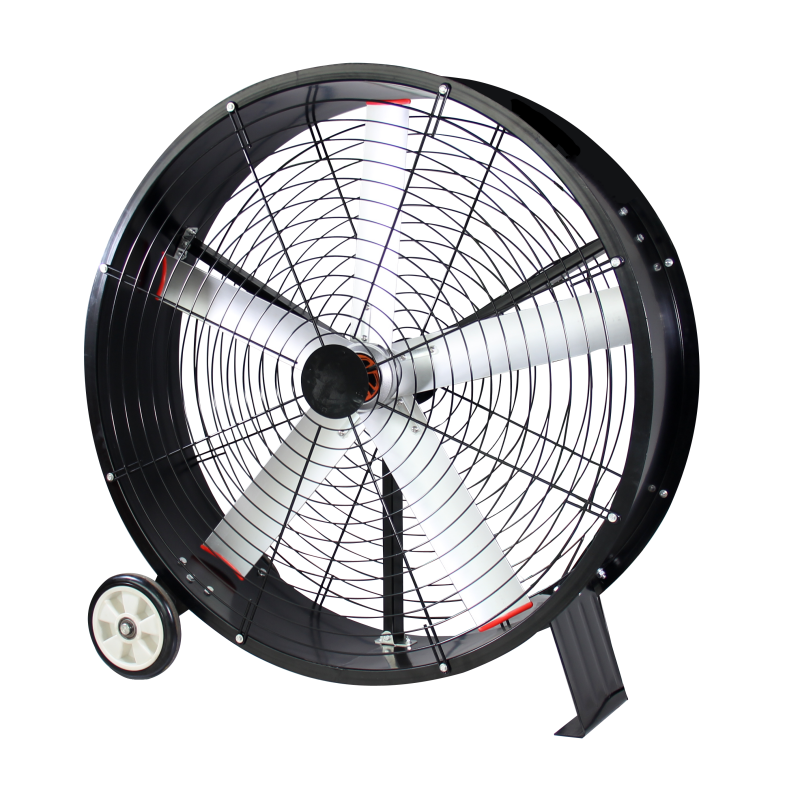
The Stratification Challenge in Industrial Spaces
Thermal Layering: Energy Waste and Occupant Discomfort in High-Bay Environments
Thermal stratification is a natural phenomenon in buildings with high ceilings, where warm, buoyant air rises and collects near the roof—creating distinct temperature layers. In industrial spaces with ceiling heights exceeding 30 feet, the temperature difference between floor and ceiling can reach 15–20 °F (8–11 °C). This gradient forces heating systems to operate longer to maintain comfort at the occupied level, increasing energy consumption by up to 20%, according to the U.S. Department of Energy (DOE 2020). Beyond efficiency losses, stratification undermines occupant comfort: workers near the floor often feel drafts or localized cold spots, while upper zones remain overheated and unused. This uneven thermal environment can reduce productivity and trigger complaints. During cooling seasons, the superheated ceiling layer radiates heat downward, raising cooling loads. Without active air mixing, the cycle of overconsumption and discomfort persists—making destratification essential for both efficiency and human performance.
Why Conventional HVAC Fails to Achieve Uniform Air Circulation at Scale
Traditional HVAC systems in industrial facilities rely on ceiling-mounted supply diffusers or unit heaters that discharge air at relatively high velocity. This air tends to short-circuit—flowing directly back to return grilles without reaching the occupied zone—leaving stratification unaddressed. Thermostats are typically mounted at 5–6 feet, sensing only conditions at that height and remaining “blind” to overheated air accumulating above. As a result, equipment runs longer cycles, wasting energy and accelerating wear. In contrast, large-scale HVLS (High-Volume, Low-Speed) fans use slow, deliberate rotation to generate a broad, gentle column of air that displaces stratified layers. Rather than creating disruptive drafts, they push warm ceiling air down walls and across the floor—achieving near-isothermal conditions. Computational fluid dynamics (CFD) modeling confirms these fans can reduce vertical temperature differentials from 15 °F to as little as 7 °F, delivering measurable improvements in both energy efficiency and occupant comfort (ASHRAE Journal 2022).
Large-Scale HVLS Fan Physics: Engineering Efficient Air Movement
Low-Speed, High-Volume Rotation and the Coanda Effect
High-Volume, Low-Speed (HVLS) fans achieve efficient air movement by rotating large-diameter blades—up to 24 feet—at minimal speeds (typically 10–50 RPM). This design captures vastly more air per revolution than smaller, high-speed units, generating smooth, laminar airflow instead of turbulent drafts. The Coanda effect enhances performance: the downward air column adheres to the floor surface and spreads horizontally as a thin, high-velocity jet. This floor jet travels across expansive open areas, eliminating stagnant zones and mixing air uniformly from floor to ceiling. One properly sized HVLS fan can replace a dozen conventional fans while consuming only ~1.1 kW per hour. Its gentle, widespread airflow destratifies temperatures, reduces HVAC cycling, and delivers consistent comfort—without inducing windchill. By combining optimized aerodynamic blade profiles with this fluid dynamic principle, industrial facilities sustain balanced thermal conditions year-round.
CFD-Validated Performance Across 30+ Foot Ceilings
Engineers use Computational Fluid Dynamics (CFD) to model and optimize HVLS fan performance in spaces with ceiling heights exceeding 30 feet. These simulations refine blade angle, hub geometry, and mounting position to ensure the air column reliably reaches the occupied zone. Field measurements confirm that a correctly installed fan delivers floor-level air velocities of 0.2–0.5 m/s—sufficient to break stratification without causing discomfort. In warehouses with 35-foot ceilings, vertical temperature differentials shrink from 15°F to just 5°F post-installation. CFD also verifies that the Coanda-assisted floor jet maintains momentum across 20,000+ square feet per fan. The resulting destratification reduces heating demand by up to 30%, translating into quantifiable energy savings. When computational predictions align with real-world airflow data, facility managers gain confidence deploying HVLS fans—even in the tallest industrial environments.
Real-World Large-Scale HVLS Fan Applications and Measurable Outcomes
Warehouses: Up to 8°F (4.4°C) Reduction in Vertical Temperature Differential
In high-bay warehouses, thermal stratification commonly creates a 15–25°F temperature difference between ceiling and floor. Large-scale HVLS fans counteract this by gently mixing the full air volume. Research shows they can reduce vertical temperature differentials by up to 8°F (4.4°C) (ASHRAE 2023). Their large airfoils move massive columns of air downward, pushing trapped warm air toward occupied levels—reducing heating system runtime and lowering energy costs, especially in cold weather. Operating at speeds under 150 RPM, these fans deliver non-disruptive airflow that avoids chilling workers. By preventing heat entrapment under the roof, they maintain the entire space within a tight 3–5°F comfort band. Improved circulation also mitigates humidity pockets and condensation—protecting inventory from moisture damage. Industry reports consistently document 20–30% reductions in heating energy demand following proper HVLS fan installation.
Manufacturing Facilities and Distribution Centers: ROI Through Energy and Comfort Gains
In manufacturing plants and distribution centers—where productivity depends on workforce well-being—large-scale HVLS fans deliver strong returns. By supplementing or reducing HVAC load, operators achieve energy savings of up to 20%, equating to $0.06–$0.12 per square foot annually. With typical payback periods of 12–18 months, the investment is rapidly recouped. More critically, uniform airflow eliminates hot and cold spots that contribute to fatigue, assembly-line slowdowns, and safety risks. Workers report higher comfort levels, and some studies link this to up to a 5% productivity gain. Near-silent operation minimizes auditory distractions, while enhanced air movement helps exhaust fumes and airborne particles—improving overall indoor air quality. These combined benefits continue to drive rapid adoption across manufacturing and logistics environments.
Beyond Thermal Comfort: Air Quality and Ventilation Advantages
Industrial environments face more than thermal challenges: stagnant air traps fumes, dust, and excess humidity—compromising worker health and operational integrity. Large-scale HVLS fans address this by generating a gentle but expansive air current that continuously mixes the building’s entire air volume. This circulation dilutes concentrations of airborne contaminants—including volatile organic compounds (VOCs) and particulate matter—that accumulate in poorly ventilated spaces. By preventing polluted air from stratifying near the ceiling and actively pushing it downward, the fans support more effective exchange with fresh outdoor air—reducing respiratory risk and improving perceived air quality.
Effective air movement also regulates humidity, inhibiting mold growth and protecting sensitive equipment and inventory. Facilities using HVLS fans more readily meet ventilation benchmarks such as OSHA’s industrial air quality guidelines—particularly when demonstrating sustained air changes per hour. Ultimately, improved indoor air quality fosters a healthier, more resilient workforce, lowers absenteeism, and mitigates long-term occupational health liabilities associated with chronic exposure to poor air.
FAQs
What is thermal stratification, and why does it occur in industrial spaces?
Thermal stratification is a temperature gradient in spaces with high ceilings where warm air rises and collects near the roof, creating distinct temperature layers. It occurs because warm air is buoyant and naturally rises, leading to uneven heating and cooling.
How do HVLS fans address thermal stratification?
HVLS fans use slow, large-scale rotations to gently mix air, pushing warm ceiling air downward and balancing temperatures across the space. This destratification improves both energy efficiency and occupant comfort.
Can HVLS fans reduce energy consumption in industrial environments?
Yes, HVLS fans can reduce energy demand by up to 30% by lowering heating and cooling system runtimes, improving thermal comfort, and eliminating temperature extremes caused by stratification.
How do HVLS fans improve air quality in industrial facilities?
HVLS fans continuously circulate air to dilute contaminants like VOCs and particulate matter, enhance fresh air exchange, and regulate humidity—improving indoor air quality and worker health.
Are HVLS fans cost-effective for large spaces?
HVLS fans have typical payback periods of 12–18 months due to their energy savings and productivity benefits. They are highly cost-effective for warehouses, manufacturing facilities, and distribution centers.
Table of Contents
- The Stratification Challenge in Industrial Spaces
- Large-Scale HVLS Fan Physics: Engineering Efficient Air Movement
- Real-World Large-Scale HVLS Fan Applications and Measurable Outcomes
- Beyond Thermal Comfort: Air Quality and Ventilation Advantages
-
FAQs
- What is thermal stratification, and why does it occur in industrial spaces?
- How do HVLS fans address thermal stratification?
- Can HVLS fans reduce energy consumption in industrial environments?
- How do HVLS fans improve air quality in industrial facilities?
- Are HVLS fans cost-effective for large spaces?
 ONLINE