 EN
EN
 AR
AR
 BG
BG
 HR
HR
 CS
CS
 NL
NL
 FI
FI
 FR
FR
 DE
DE
 EL
EL
 IT
IT
 KO
KO
 NO
NO
 PL
PL
 PT
PT
 RO
RO
 RU
RU
 ES
ES
 SV
SV
 ID
ID
 LT
LT
 SR
SR
 UK
UK
 VI
VI
 HU
HU
 TH
TH
 TR
TR
 FA
FA
 MS
MS
 HY
HY
 AZ
AZ
 KA
KA
 BN
BN
 LO
LO
 LA
LA
 NE
NE
 MY
MY
 KK
KK
 KY
KY

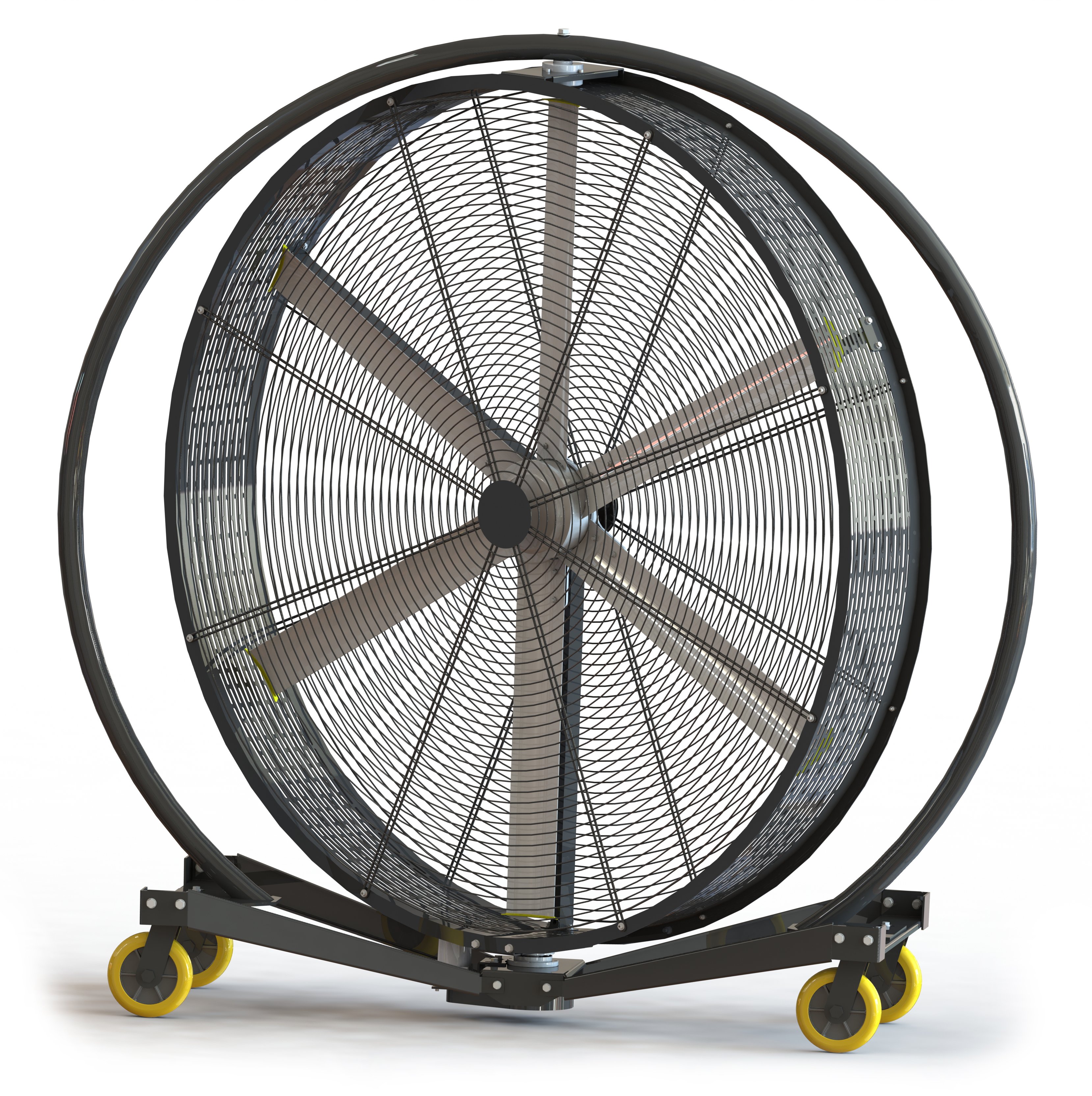
Blade Aerodynamics: Shape, Pitch, and Profile Impact on Airflow Performance
The aerodynamic profile of a large-scale HVLS fan’s blades directly determines how effectively it circulates air in vast spaces. Key design variables—airfoil shape, taper, and tip geometry—interact to create a stable, laminar column that reaches occupants with minimal energy waste. The following sections examine how these elements influence performance.
Airfoil geometry and blade taper: optimizing laminar airflow and column stability for large-scale HVLS fan applications
A large-scale HVLS fan blade functions as a rotating wing. An airfoil profile with a rounded leading edge and tapered trailing edge minimizes flow separation and drag, while a progressive chord reduction from root to tip helps distribute lift evenly—reducing turbulent bursts that destabilize the air column. This taper also lowers centrifugal stress and improves aerodynamic efficiency. When combined with a controlled pitch twist—typically 4°–8° at the hub, decreasing toward the faster-moving tip—the blade sustains smooth, laminar flow across its entire span. The result is a cohesive downward column that reaches the occupied zone without breaking into wasteful eddies.
Computational fluid dynamics (CFD) studies confirm that well-designed airfoils with optimal taper can increase floor-level air delivery by up to 18% compared to constant-chord, flat-plate blades of the same diameter. This improvement translates directly into better thermal comfort and destratification—without increasing motor load. Reduced aerodynamic noise and vibration further extend drive system life, reinforcing that airfoil geometry is not just about quiet operation, but foundational to economic performance.
Winglets and tip vortex mitigation: preserving vertical air column integrity and reducing energy waste in high-ceiling spaces
At the blade tip, pressure differentials between upper and lower surfaces generate a swirling vortex that siphons energy from the primary airflow. In high-ceiling environments like warehouses or atriums, this tip vortex weakens the vertical column, dispersing air laterally instead of driving it downward. Winglets—small, aerodynamic upturns or fences integrated at the tip—smooth the pressure transition, reducing vortex intensity and recovering otherwise lost pressure energy. Borrowing from aircraft winglet principles, this approach scales powerfully on large-diameter, low-speed rotors: even modest improvements in airflow uniformity yield measurable facility-wide energy savings.
Field measurements in a 30-foot-ceiling facility showed that retrofitting blades with winglets increased downward airflow velocity by ~12% at head height while cutting fan power consumption by 5%. The resulting column remained more cohesive, expanding effective coverage radius. Modern designs integrate winglets seamlessly into composite blade structures—avoiding added weight or imbalance. For facility managers, specifying blades with effective tip treatment is a proven way to preserve column integrity and reduce lifetime operating costs.
Energy Efficiency Drivers: How Blade Design Reduces Motor Load and Operational Costs
Torque optimization and low‑RPM synergy: why efficient blade aerodynamics lower power draw in large‑scale HVLS fan systems
HVLS fans operate most efficiently when aerodynamic resistance on the blades is minimized. Refined airfoil geometries, progressive taper, and integrated winglets all reduce boundary-layer separation and tip-vortex drag—directly lowering the torque required to sustain target airflow. Because power draw equals torque multiplied by rotational speed (P = τ × ω), even small torque reductions at characteristically low RPM deliver outsized energy savings. Research shows optimized blade profiles can cut energy consumption by 20–30% versus conventional straight-blade designs—moving the same air volume with less motor resistance.
This low-RPM synergy is critical: slow rotation magnifies the payoff of aerodynamic refinement, allowing high-torque, high-efficiency motors to run well below capacity with minimal strain. The result is lower kilowatt-hour usage, reduced peak demand charges, and extended motor and drive-component life. In a typical 30,000-square-foot warehouse, blade-driven torque optimization can reduce annual electricity costs by thousands of dollars—while maintaining full coverage and occupant comfort. Efficient blade aerodynamics thus transform the fan’s low-speed nature from a constraint into a powerful efficiency lever—cutting both energy bills and maintenance overhead.
Material and Structural Choices: Balancing Durability, Weight, and Long-Term Efficiency
Blade material selection shapes both immediate performance and long-term operational economics. Lightweight yet robust materials—such as high-grade aluminum alloys or advanced composites—reduce rotational inertia and lower motor torque demand during continuous low-speed operation. But weight reduction must never compromise structural integrity: blades must withstand aerodynamic loads, vibration, and potential impacts over years of 24/7 use.
Composite blades with honeycomb cores, for example, deliver exceptional strength-to-weight ratios while naturally damping vibrations that could accelerate wear. Environmental durability matters too—anodized aluminum resists corrosion in humid or chemically aggressive air, and UV-stabilized polymers prevent degradation under skylight exposure. Critically, consistent material performance prevents blade deflection or warping over time—both of which would distort the air column and increase energy consumption. Engineers therefore prioritize stiffness, mass distribution, and fatigue resistance to sustain aerodynamic efficiency without raising maintenance demands. This holistic balance ensures long-term reliability and minimizes total cost of ownership.
Real-World Performance: Measuring Airflow Coverage and Energy Savings in Commercial & Industrial Settings
CFD-validated airflow mapping vs. field measurements: quantifying efficiency gains from optimized large-scale HVLS fan blades
Computational fluid dynamics (CFD) models provide valuable predictive insight—but field validation with calibrated anemometer grids confirms real-world outcomes. In one large-scale HVLS fan retrofit, CFD simulations forecast a 28% improvement in floor-level air velocity uniformity after switching to an airfoil-optimized, tapered, winglet-equipped blade design. On-site measurements recorded a 25% gain—closely aligning with modeling and delivering a 19% drop in motor energy consumption (2023 facility report). The slight deviation stemmed from minor ceiling obstructions not fully captured in simulation, underscoring why empirical verification remains essential.
This hybrid approach delivers actionable metrics: facilities replacing standard flat blades with optimized profiles routinely reduce HVAC supplement runtimes by up to 22%. Fast-response velocity sensors confirm sustained column coherence across the full space—preventing thermal stratification and enabling uniform temperature control. By combining virtual prototyping with real-world data, operators can project payback periods under two years—making blade aerodynamics a measurable, bankable lever for energy savings.
FAQs
What is an HVLS fan?
HVLS stands for High-Volume Low-Speed. These fans are designed to circulate large volumes of air at low rotational speeds, making them ideal for use in large spaces like warehouses or atriums.
How does blade design affect HVLS fan efficiency?
Blade design impacts air circulation, motor torque, and energy efficiency. Optimized airfoils, tapering, and winglets reduce drag and enhance laminar airflow, leading to better performance with lower energy consumption.
What are winglets, and why are they important?
Winglets are aerodynamic features at the blade tips that minimize energy loss caused by tip vortex. They preserve airflow integrity and reduce lateral air dispersion, improving overall fan efficiency.
What materials are best for HVLS fan blades?
Lightweight yet durable materials like high-grade aluminum alloys and advanced composites are ideal. These materials withstand long-term use without compromising aerodynamic performance.
Can I retrofit existing HVLS fans with optimized blades?
Yes, retrofitting is possible and often delivers notable improvements in airflow and energy savings. Field tests have shown performance upgrades in facilities after blade optimization.
Table of Contents
- Blade Aerodynamics: Shape, Pitch, and Profile Impact on Airflow Performance
- Energy Efficiency Drivers: How Blade Design Reduces Motor Load and Operational Costs
- Material and Structural Choices: Balancing Durability, Weight, and Long-Term Efficiency
- Real-World Performance: Measuring Airflow Coverage and Energy Savings in Commercial & Industrial Settings
- FAQs
 ONLINE