 EN
EN
 AR
AR
 BG
BG
 HR
HR
 CS
CS
 NL
NL
 FI
FI
 FR
FR
 DE
DE
 EL
EL
 IT
IT
 KO
KO
 NO
NO
 PL
PL
 PT
PT
 RO
RO
 RU
RU
 ES
ES
 SV
SV
 ID
ID
 LT
LT
 SR
SR
 UK
UK
 VI
VI
 HU
HU
 TH
TH
 TR
TR
 FA
FA
 MS
MS
 HY
HY
 AZ
AZ
 KA
KA
 BN
BN
 LO
LO
 LA
LA
 NE
NE
 MY
MY
 KK
KK
 KY
KY

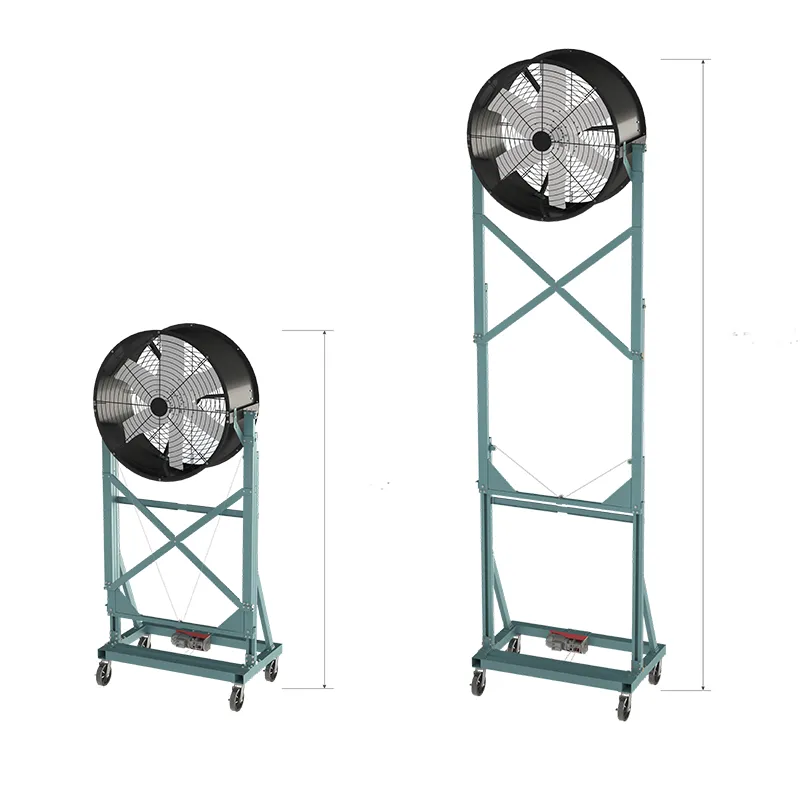
Energy Efficiency and Operational Cost Advantages of Energy-Efficient HVLS Fans
Power Consumption Comparison: HVLS Fans vs. High-RPM Industrial Fans
Energy-efficient HVLS fans drastically reduce electricity use compared to high-RPM industrial fans. Their large-diameter blades move substantial air volumes at low rotational speeds—using remarkably little power. A single 7.3‑meter (24‑foot) HVLS fan typically operates with a 1.5 kW motor, covers 1,200–1,500 m², and consumes less than 1 kWh per hour. In contrast, achieving similar coverage with multiple high-velocity fans often requires 5 kW to 10 kW of combined motor power, as small-diameter units must spin much faster—wasting energy and creating turbulent, spot-cooling effects. According to the U.S. Department of Energy, integrating HVLS fans can lower HVAC-related energy consumption by 20% to 50% in large facilities DOE 2023. This efficiency stems from gentle, horizontal airflow that equalizes temperature from floor to ceiling—reducing reliance on air-conditioning or heating systems. Where high-RPM fans stir dust and generate noise, HVLS fans deliver uniform comfort with minimal electrical draw, making them a cornerstone of sustainable facility operations.
Lifecycle Cost Analysis: Maintenance, Lifespan, and ROI for Energy-Efficient HVLS Fans
Beyond immediate power savings, energy-efficient HVLS fans deliver compelling lifecycle cost advantages. Their robust, direct-drive motors eliminate belts, pulleys, and gearboxes—the primary wear points in traditional industrial fans. Maintenance typically requires only periodic inspections and blade cleaning, whereas high-RPM fans often demand bearing replacements or motor rebuilds every few years. This sturdy design translates to an expected service life of 15 to 20 years—far exceeding the 5- to 7-year lifespan of many conventional units. The extended longevity, combined with drastically lower energy bills, enables most facilities to recover their initial investment in one to two years, with some achieving payback in under 12 months EnergyLogic 2024. Less frequent replacements also reduce manufacturing waste, supporting a circular-economy approach. When operators factor in reduced upkeep, longer operational life, and swift payback, HVLS fans consistently deliver a lower total cost of ownership than their high-speed counterparts.
Air Movement Performance: Coverage, Uniformity, and Vertical Air Distribution
CFM Efficiency and Thermal Uniformity in High-Ceiling Spaces (Warehouses, Factories)
The true measure of an industrial fan’s worth is not just how much air it moves, but how effectively it conditions an entire space. An energy-efficient HVLS fan achieves superior cubic feet per minute (CFM) efficiency by design—moving massive air volumes with minimal energy input. While a standard floor fan generates a focused, turbulent blast, an HVLS fan produces a broad, slow-moving column that displaces far more cubic feet of air per watt. This principle directly improves thermal uniformity in high-ceiling environments like warehouses and factories, where air stratification is chronic. Optimized large-scale air movement mechanisms can achieve up to a 30% reduction in heating or cooling energy use by eliminating temperature layers and ensuring consistent conditions from floor to ceiling ScienceDirect 2023. By gently mixing the entire air volume, these fans eliminate hot and cold spots—creating stable thermal environments that high-speed fans, which stir air locally, cannot replicate.
Wide-Area Coverage Mechanics: How Large Blades and Low RPM Enable Whole-Space Circulation
The physics of wide-area coverage is elegantly simple—and rooted in aerodynamic efficiency. The hallmark of an energy-efficient HVLS fan is its ability to generate a gentle, massive air column that flows downward and outward. The large blade diameter, combined with low rotational speed (RPM), is the key. Unlike a small fan that uses violent speed to project a narrow jet of air that quickly dissipates, an HVLS fan’s slow rotation creates a vast, cylindrical wave of air that travels across the floor and horizontally before drawing back up to be re-circulated. This persistent column typically spans a diameter equal to the fan’s size—creating a massive footprint of steady, velocity-specific airflow that cools occupants through consistent evaporation of perspiration without disruptive drafts. This whole-space circulation mechanism ensures no corner of the facility remains stagnant while efficiently delivering conditioned air to where it most meaningfully changes mean radiant temperature—directly improving worker comfort and safety across vast industrial floor plans.
Destratification and HVAC Synergy: How Energy-Efficient HVLS Fans Reduce System Load
Physics of Destratification: Mixing Warm Ceiling Air with Cooler Occupied Zones
When heat enters a high-bay space, it naturally rises—forming distinct temperature layers: warm air accumulates near the ceiling, while cooler air settles at the floor where people work. This stratification creates a vertical gradient that can exceed 20°F, forcing heating systems to overwork. An energy-efficient HVLS fan reverses this pattern by slowly rotating its large blades, gently pushing warm ceiling air downward without perceptible drafts. The resulting large-volume airflow continuously mixes the entire room, breaking up stratified layers. This destratification process equalizes temperatures from floor to ceiling—reducing the differential to just a few degrees.
HVAC Integration Benefits: Up to 30% Heating/Cooling Energy Reduction in Real Facilities
When an energy-efficient HVLS fan maintains uniform air distribution, thermostats sense the true occupied-zone temperature—preventing unnecessary heating or cooling cycles. Real-world applications in warehouses and factories report up to a 30% reduction in HVAC energy consumption. This lower demand cuts utility bills and reduces wear on heating and cooling equipment, extending system service life. Many facilities achieve full return on investment within 12 to 18 months—proving that pairing HVLS fans with existing HVAC systems is one of the most cost-effective efficiency upgrades available.
Thermal Comfort and Human-Centric Performance of Energy-Efficient HVLS Fans
The gentle, widespread airflow of an energy-efficient HVLS fan creates a consistent microclimate that directly benefits people. Unlike high-velocity industrial fans that cause disruptive drafts, the low RPM produces a massive column of air that moves slowly over the skin—accelerating evaporative cooling and making the occupied zone feel up to 10°F cooler without lowering the actual thermostat temperature. This natural cooling effect reduces the risk of heat stress in warehouses, factories, and assembly areas—directly supporting workforce safety and comfort.
Beyond temperature perception, the human-centric impact translates into measurable performance gains. Consistent air movement eliminates stuffy, stagnant zones and helps manage humidity—fostering a more alert and productive environment. Facility managers consistently report improvements in employee morale and reductions in absenteeism when thermal comfort is prioritized, and the quiet operation of HVLS fans avoids the noise fatigue associated with multiple high-speed alternatives. By addressing the thermal environment, the energy-efficient HVLS fan becomes a lever for better cognitive function and sustained output—proving that human comfort and operational efficiency go hand in hand.
FAQ
What are HVLS fans?
HVLS (High-Volume, Low-Speed) fans are large industrial fans designed to move significant air volumes at low rotational speeds, improving energy efficiency and providing uniform airflow across large spaces.
How do HVLS fans reduce energy consumption?
HVLS fans utilize large-diameter blades to move more air at lower speeds, reducing electricity use compared to multiple high-speed fans. They also lower the load on HVAC systems by maintaining thermal uniformity, which can cut energy consumption by up to 30%.
What kind of maintenance do HVLS fans require?
HVLS fans have direct-drive motors that lack belts or pulleys, minimizing maintenance. They generally require periodic inspections and blade cleaning, making upkeep relatively low compared to traditional high-speed fans.
What is the payback period for HVLS fans?
Most facilities recover their investment in HVLS fans within one to two years, with some seeing payback in under 12 months, thanks to energy savings and reduced maintenance costs.
Can HVLS fans improve workplace comfort?
Yes, HVLS fans create gentle, uniform airflow that enhances thermal comfort by cooling occupants naturally through evaporative cooling. This helps reduce heat stress and fosters a more productive work environment.
Table of Contents
- Energy Efficiency and Operational Cost Advantages of Energy-Efficient HVLS Fans
- Air Movement Performance: Coverage, Uniformity, and Vertical Air Distribution
- Destratification and HVAC Synergy: How Energy-Efficient HVLS Fans Reduce System Load
- Thermal Comfort and Human-Centric Performance of Energy-Efficient HVLS Fans
- FAQ
 ONLINE